5 facts about the Elli PowerCenter
How do you connect e-mobility and the power grid? The Elli PowerCenter in Salzgitter does exactly that with 40 MWh of storage capacity and 20 MW of power. Here are five fascinating facts about Elli's pioneering project.
A project is currently taking shape in Salzgitter that shows where our energy system is heading. With a storage capacity of 40 MWh and an output of 20 MW, the Elli PowerCenter is a large-scale battery storage system – but in reality, it is about much more than that. It is about how electric mobility, renewable energy, and the power grid can work together more effectively in the future.
Why large-scale storage systems are so relevant right now
Anyone following energy reporting will quickly notice: large-scale battery storage is everywhere. The reason is simple. More and more electricity is coming from wind and solar power – sources that are not constantly available. At the same time, electricity demand and peak loads are increasing, driven by e-mobility, charging hubs, and heat pumps.
However, the central challenge of our energy supply is not excessive consumption, but too much renewable energy at the wrong time and in the wrong place. When large amounts of wind or solar power are generated, they often cannot be used or transmitted – and are therefore lost.
Large-scale storage systems address exactly this imbalance: they absorb electricity when there is an oversupply and make it available when it is needed. That is why energy companies, industry, and cities are currently investing heavily in storage solutions. Large-scale batteries are becoming a key element of the future energy infrastructure.
A connected energy ecosystem
This is precisely where the Elli PowerCenter comes in. Electricity is not simply “parked” here; instead, it is intended to be used intelligently in the future – for example, to charge vehicles, supply corporate sites, and stabilize the power grid.
The result is a system that can respond flexibly to demand and market conditions, deploying renewable energy where it is truly needed.
For Elli, the PowerCenter marks the entry into a new business field. In 2023, the first pilot project of this kind was commissioned in Baunatal and has since been providing practical experience in the management of grid-connected storage systems.
The fact is: large-scale storage systems open up new opportunities in energy trading and flexibility services – and turn electric mobility into an active part of the energy system. In this article, we share five exciting facts about the Elli PowerCenter that illustrate how the project is actively shaping the energy transition.
1. Location
The Elli PowerCenter is being built at the Volkswagen Group’s production and development site in Salzgitter – where the battery production of the future is already taking shape today. At this location, the entire battery lifecycle is implemented in one place, including manufacturing, recycling, and additional processes.
2. Technical specifications
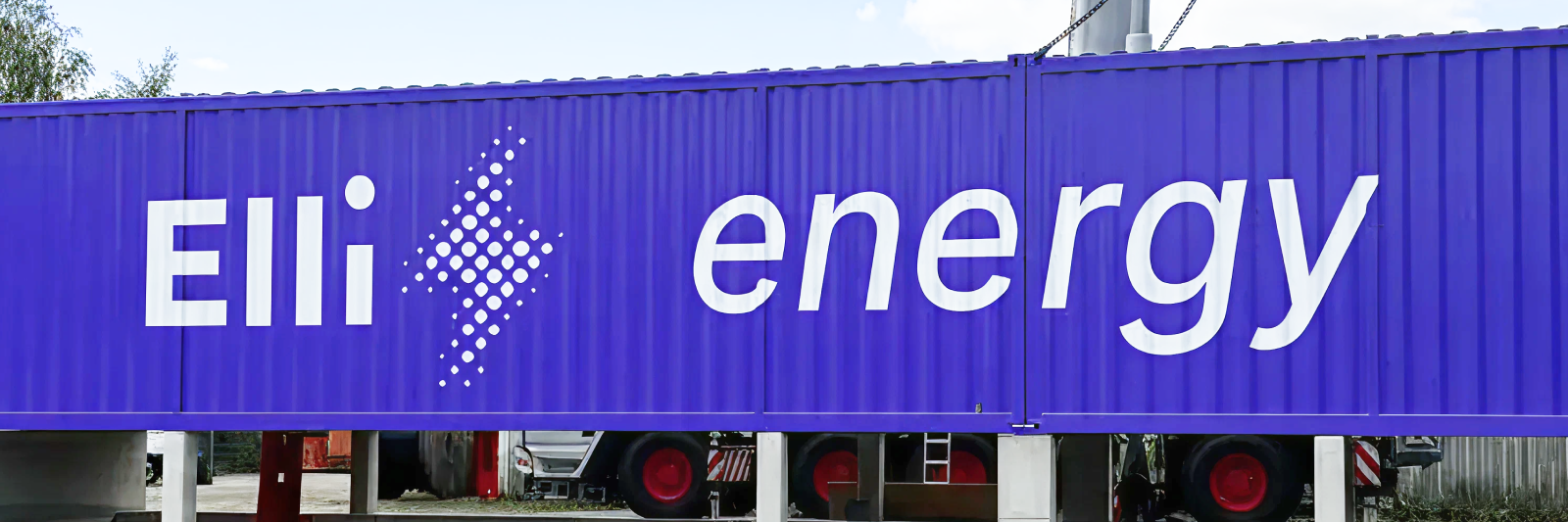
Across an area of approximately 2,500 square meters, 13 containers – each around six meters long – are being installed. They house the central technical components of the storage system, including inverters, transformers, and high-performance battery systems with a total output of 20 megawatts and a storage capacity of 40 megawatt-hours (MWh). Each container of the Elli PowerCenter contains 12,960 battery cells (Unified Cell) from PowerCo.
3. Battery technology in use
The storage solution uses battery packs from Volkswagen subsidiary PowerCo, manufactured using the so-called Unified Cell technology (e.g. LFP – lithium iron phosphate). For Elli, this means close collaboration and synergies within the Volkswagen Group, enabling expertise from automotive production to be transferred directly into stationary storage solutions.
4. A scalable platform for energy trading
With the PowerCenter, Elli is laying the foundation for a new energy platform in which stationary large-scale storage systems and mobile batteries from electric vehicles work together to make the power grid stable and future-ready. Batteries can thus be used both in vehicles and as grid-connected assets – for greater flexibility and efficiency in the energy system.
A project with a future: industry analyses show that the market for large-scale storage systems will grow rapidly by 30–40 percent in the coming years – reaching over 100 GW in Europe by 2030.
5. Energy management
Alongside its large-scale storage business, Elli already offers energy trading as a service today. In 2025, Elli managed around 200 GWh for third parties, leveraging its market access to electricity trading. The decisive advantage, however, lies in combining trading with its own storage assets: stored energy allows traders to act independently of short-term fluctuations in the electricity market – they do not have to sell immediately, but can wait for the optimal moment when other market participants need to buy.
In this way, trading and grid stability can be intelligently combined, creating sustainable business models that actively support the energy transition.